
Tire BasicsBuying Guide
How to Read a Tire Size: What 225/65R17 100H Means
By COCOTIRES TeamUpdated October 15, 20263 min read
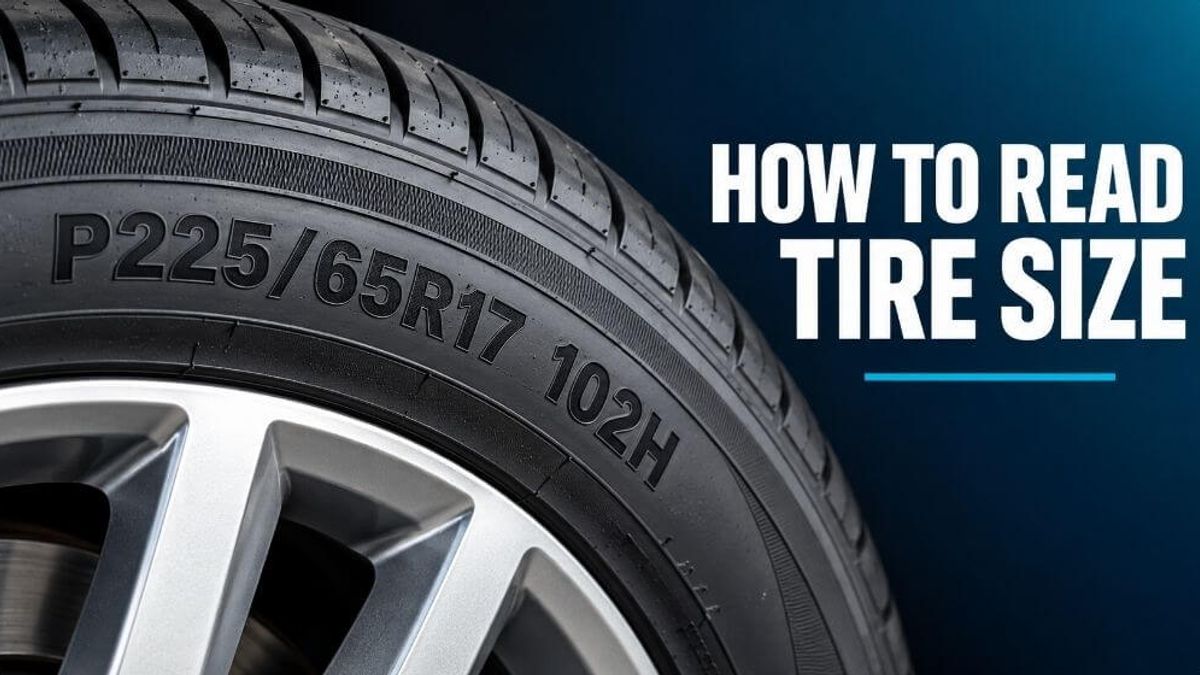
The code on the side of a tire looks like a puzzle, but it tells you exactly which tire fits your vehicle. Once you know how to read it, ordering the right size online is easy.
Where to find your tire size
You can find the size in three places:
- On the sidewall of the tire you have now.
- On the sticker in the driver’s door frame, which lists the size the manufacturer recommends.
- In your owner’s manual.
Use the size recommended for your vehicle. If you are not sure, contact us before you order.
An example: P225/65R17 100H
Here is what each part means.
| Part | Meaning |
|---|---|
| P | Passenger car tire. LT means light truck. Many metric sizes have no letter at the start, like 225/65R17 |
| 225 | Width of the tire in millimetres, from sidewall to sidewall |
| 65 | Aspect ratio: the sidewall height as a percentage of the width. Here it is 65% of 225 mm, about 146 mm. A smaller number means a shorter, stiffer sidewall |
| R | Radial construction, which almost all tires use today |
| 17 | Diameter of the wheel in inches. This tire fits a 17-inch wheel |
| 100 | Load index, a code for the most weight one tire can carry. Index 100 means 800 kg (1,764 lb) per tire |
| H | Speed rating, the top speed the tire is rated for. H means 210 km/h (130 mph) |
Load index and speed rating
Your new tires should have a load index and a speed rating equal to or higher than the original tires. A lower load index can mean the tire cannot carry the weight of your vehicle. You can find the original values in the owner’s manual or on the sidewall of your current tires.
Common speed ratings:
| Letter | Top speed |
|---|---|
| Q | 160 km/h (99 mph) |
| S | 180 km/h (112 mph) |
| T | 190 km/h (118 mph) |
| H | 210 km/h (130 mph) |
| V | 240 km/h (149 mph) |
| W | 270 km/h (168 mph) |
| Y | 300 km/h (186 mph) |
Truck and off-road sizes
Some larger tires use inches for everything, like 35x12.50R17. In that size, 35 is the overall height in inches, 12.50 is the width in inches, and 17 is the wheel diameter in inches. Browse all-terrain tires and truck and SUV tires for these sizes.
Other markings worth knowing
- Snowflake symbol: the three-peak mountain snowflake means the tire passed a snow traction test. Winter and all-weather tires carry it. Read more in our winter tire guide.
- M+S: mud and snow. It describes the tread design, but it is not the same as the snowflake symbol.
- DOT date code: the last four digits of the DOT code show when the tire was made. The first two digits are the week and the last two are the year, so 0918 means the ninth week of 2018. Check the date on any tires you buy so you know how old they are.
Do not change the size without advice
A different width or wheel diameter can change how the speedometer reads, how the tire clears the car and how the vehicle drives. If you want a size that is different from the one recommended for your vehicle, ask a tire professional first.
Order your size
Once you have your size, browse all tires and choose the season that suits your driving. You can narrow down by season, type and brand. Tires ship free across Canada. See our Shipping policy.
Frequently asked questions
Where do I find my tire size?
It is printed on the sidewall of your current tires, on the sticker in the driver’s door frame, and in your owner’s manual. Use the size recommended for your vehicle.
What does the R in a tire size mean?
R stands for radial construction, which is how almost all tires are built today. The number after it is the wheel diameter in inches.
Can I choose a different load index or speed rating?
Your new tires should have a load index and a speed rating equal to or higher than the original tires. If you want something different, ask a tire professional first.
How do I find out how old a tire is?
Look at the last four digits of the DOT code on the sidewall. The first two are the week and the last two are the year, so 0918 means the ninth week of 2018.